Start With Curiosity
The process begins with something the child is already interested in. The mind map gives that curiosity a place to expand instead of turning it immediately into a formal assignment.
Personal Projects
A personal extension of my portfolio: the learning frameworks, apps, and creative projects I've built with my kids to help them grow into adaptable, cross-functional thinkers in an AI-shaped world.
My professional work is about turning ambiguity into systems, products, and repeatable execution. At home, I apply that same instinct in a more personal way: helping my kids organize their thoughts, explain their ideas, build confidence with language, and see how different parts of the world connect.
This page is not separate from my professional work. It is a more personal expression of the same operating system: understand the problem deeply, design a useful framework, test it in real life, and keep improving it.
I believe the AI era will reward people who can move across disciplines: people who can ask better questions, connect ideas, explain tradeoffs, use tools effectively, and collaborate with both humans and intelligent systems. For kids, that means education cannot only be about memorizing facts or completing isolated worksheets. It also has to cultivate judgment, curiosity, communication, and systems-level thinking.
These projects are smaller in scale than enterprise platforms, but they reflect the same pattern I bring to professional work: notice a gap, create a practical structure around it, test it with real people, and keep improving it. In this case, the users happen to be my kids.
Learning Framework
Helping kids turn curiosity into structure, and structure into clear communication.
Thinking in Systems started as a simple idea at home: introduce my kids to mind maps as a way to organize what they were already curious about.
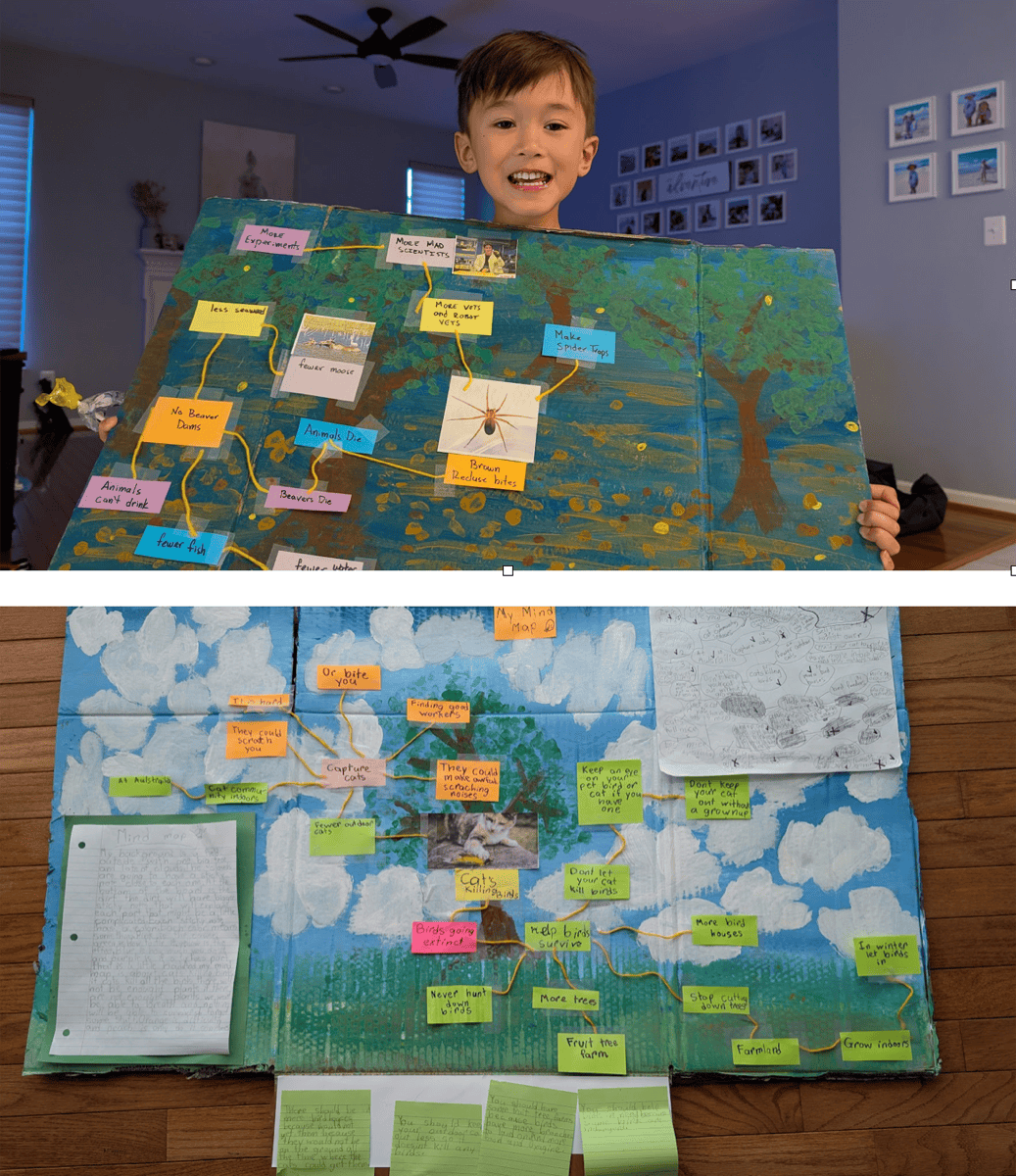
I showed them the basic concept: one central idea, connected to related ideas, with branches that could keep expanding. I guided them lightly at first, but I was not trying to force a rigid assignment. What surprised me was how quickly they took ownership of it. They got excited, completed their own mind maps, and then started creating more on their own.
That became the opening. Once they had a visual map of their thoughts, I asked them to write one or two sentences for the most important nodes. Those sentences quickly became topic sentences. Then I asked them to expand each one by imagining what someone else might ask: What does this mean? Why does it matter? What example would help explain it? What connects to this idea?
From there, the essay emerged naturally. The mind map became the outline. The node sentences became the topic sentences. Their explanations became paragraphs. Instead of starting with "write an essay," they started with curiosity, visual organization, and conversation.
The important part is that it did not feel forced. They were excited to participate because the structure helped them express their own ideas instead of simply completing an assignment.
The framework works because each step feels small. A child does not have to jump from a blank page to a finished essay. They start with an idea, map what they know, choose the important parts, explain those parts, and gradually discover that they have built something structured.
The process begins with something the child is already interested in. The mind map gives that curiosity a place to expand instead of turning it immediately into a formal assignment.
Mind maps help kids see their own thoughts. Ideas that felt scattered become nodes, branches, patterns, and relationships they can point to and talk about.
The adult role is to introduce the tool, ask good questions, and help the child notice connections. The child still owns the ideas and the direction.
Important nodes become one or two simple sentences. Those sentences naturally become topic sentences without starting from the pressure of "write a paragraph."
Each topic sentence grows by asking what someone else might want to know: What does it mean? Why does it matter? What example would make it clearer?
The final essay is not forced from a blank page. It grows from a visual map, then sentences, then explanations, until the child realizes they have built a full piece of writing.
The kids were not being pushed through a rigid writing exercise. They were excited because the mind map made their ideas visible. Once they could see their thoughts, writing became less about filling space and more about explaining something they already cared about.
A downloadable version of the Thinking in Systems document, including prompts and notes from the way we practiced this at home.
Download PDFOpen PDF in a new tab if the preview does not load on your device.
Examples of how my kids started putting their thoughts on paper, connecting ideas visually before turning those ideas into sentences and explanations.
Product Build
A vocabulary practice app for kids who can understand complex words before they can comfortably read or spell them.
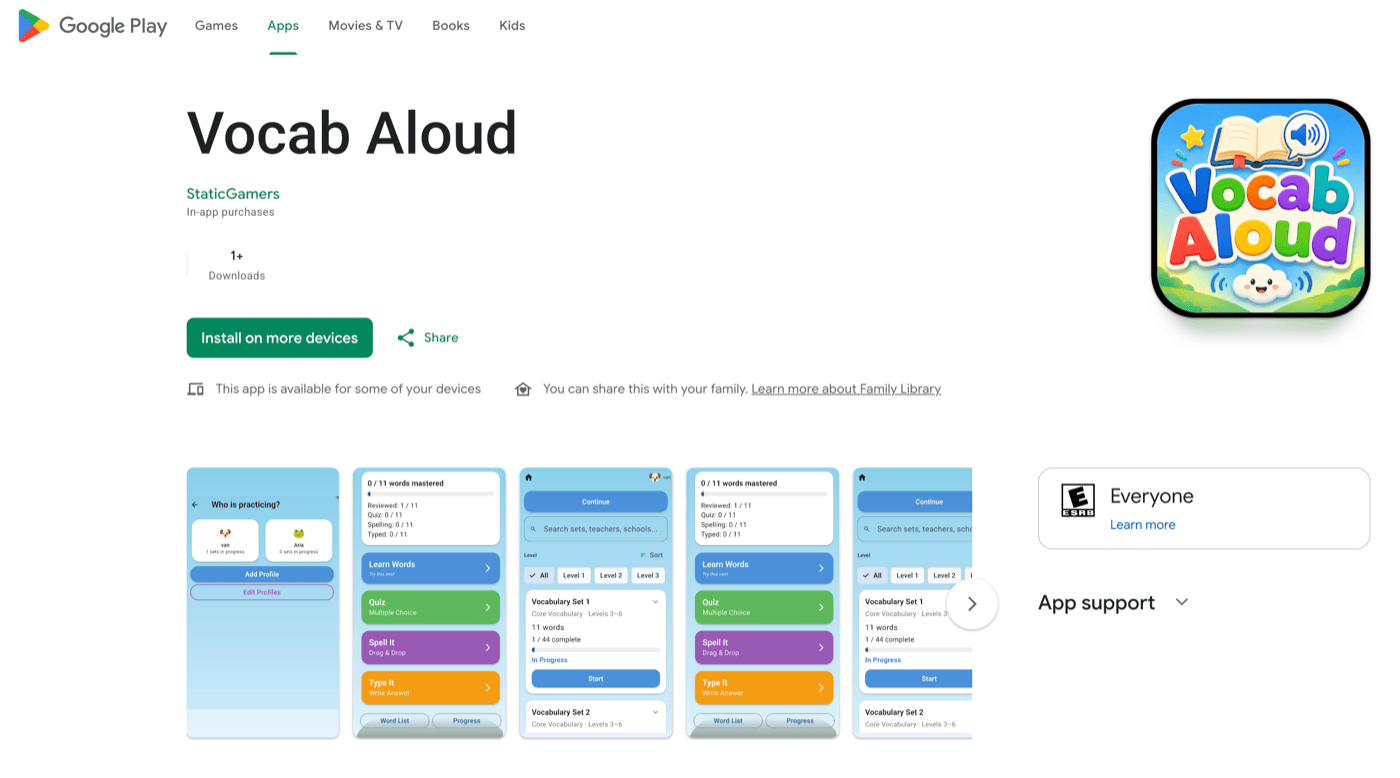
Vocab Aloud is an Android app I created for my kids to practice vocabulary without being constrained by reading ability. The idea came from a simple observation: children can often understand the meaning of advanced words before they can reliably read or spell those words on their own.
The app supports that gap by letting kids hear words, definitions, quiz prompts, and answer choices aloud. Instead of treating reading fluency as the gatekeeper for vocabulary growth, Vocab Aloud gives children another path into language: listening, recognition, meaning, spelling practice, and typed recall.
The goal is not to replace reading. The goal is to let vocabulary development move ahead while reading mechanics are still catching up.
The app was built around a learning sequence I noticed at home: children can understand and use the meaning of words before they can reliably spell or read those words independently. Audio support gives them a way to practice richer vocabulary without waiting for every reading mechanic to catch up.
Creative Collaboration
Small stories used as a way to practice imagination, language, humor, and shared authorship.
I have also been writing children's books with my kids. These projects are intentionally playful, but they serve a deeper purpose: helping the kids see that their ideas can become real artifacts: stories, characters, jokes, scenes, and eventually finished books.
The books give us a way to practice narrative structure, character choices, cause and effect, humor, revision, and collaboration. They also create a space where the kids' strange, funny, and unexpected ideas can become part of a finished artifact.
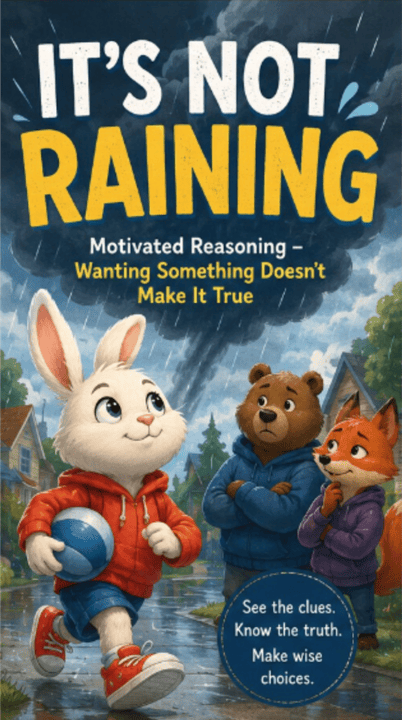
A playful children's story built around observation, misunderstanding, and the way a simple claim can become more complicated when characters look closer at the world around them.
A funny and slightly absurd children's story that uses contrast, sensory language, and character reactions to help kids play with description, humor, and expectation.
Writing with kids creates a feedback loop: they contribute ideas, see those ideas shaped into language, react to the result, and then improve it. It turns creativity into something visible and revisable.
Whether I am building enterprise delivery systems, AI-enabled products, developer platforms, vocabulary apps, or learning frameworks for my kids, the pattern is the same: find the hidden gap, design a practical system, and make it easier for people to do something they were already trying to do.
This page is personal, but it is also part of the same story as the rest of my portfolio. It shows how I think, how I build, and how I try to prepare the next generation to reason clearly in a world that is changing quickly.